Explore our network of country and industry based websites to access localized information, product offerings, and business services across our group.
Log in to start sending quotation requests for any product.
Don't have an account? Sign Up Here
Home Formic Acid Supply Chain Trends for Asia’s Textile Industry in 2026
Trade Insights | Supply Chain | 25 May 2026
Introduction Formic Acid
Formic Acid in the Asian Textile Chemicals Landscape
Supply Chain Dynamics for Formic Acid in Asia
Key Benefits and Applications of Formic Acid in Textiles
Sourcing Strategies and the Role of chemtradeasia
Conclusion
Asia has become the global epicenter for textile manufacturing, accounting for more than 60% of the world’s textile and apparel exports, led by China, India, Bangladesh, Vietnam, Indonesia, and Pakistan. Behind this dominance is a complex ecosystem of textile chemicals that enable efficient fiber processing, dyeing, finishing, and quality control. Among these chemicals, formic acid stands out as a critical, high-volume intermediate, especially for leather processing, dyeing, and pH control in textile wet processes.
As we approach 2026, the supply chain for formic acid in Asia is undergoing structural changes driven by environmental regulations, energy price volatility, and shifting trade flows. Producers, distributors, and textile manufacturers must adapt their sourcing strategies to ensure reliable, cost-effective, and compliant supply. This is particularly important for export-oriented mills that must meet increasingly strict sustainability and safety standards from brands in Europe and North America.
This article examines the evolving supply chain of formic acid for the textile chemicals industry in Asia, with a focus on market trends, logistics, product applications, and sourcing strategies. It also highlights how specialized distributors such as chemtradeasia can help textile manufacturers and chemical formulators manage risk, optimize procurement, and maintain consistent quality across diverse Asian markets.
Formic acid (HCOOH) is a simple organic acid widely used in textile and leather processing for its strong acidity, low molecular weight, and relatively favorable environmental profile compared with some mineral acids. In textiles, it is used for pH adjustment in dyeing, neutralization after alkaline treatments, and as a key aid in wool and polyamide processing. In leather, it is central to pickling, tanning, and finishing operations. Asia’s rapid growth in textile and leather capacity has therefore been closely linked to rising regional demand for industrial-grade formic acid.
Globally, the formic acid market is projected to grow at a CAGR of around 4–5% through 2030, with Asia-Pacific being the fastest-growing region. China is both the largest producer and consumer, while India, South Korea, and Southeast Asian countries are expanding their consumption in textiles, rubber, agriculture, and industrial cleaning. For textile chemicals alone, demand is driven by increased production of cotton and synthetic blends, higher processing intensity, and the shift toward more controlled, high-performance dyeing systems that require precise pH and process control.
Within Asia, the formic acid supply base is relatively concentrated, with major production hubs in China and, to a lesser extent, India and parts of Southeast Asia. However, consumption is geographically dispersed across hundreds of textile clusters, from Guangdong and Zhejiang in China, to Tiruppur and Surat in India, to industrial zones in Vietnam, Indonesia, and Bangladesh. This geographic mismatch between production and consumption creates a strong need for efficient regional distribution networks and reliable partners like chemtradeasia that can bridge the gap between large producers and fragmented end-users.
The supply chain for formic acid in Asia typically begins with large-scale chemical producers using either the methanol carbonylation route or the oxidation of hydrocarbons (such as butane) to generate formic acid as a by-product or dedicated product. China hosts several world-scale plants, benefiting from integrated petrochemical complexes and cost-competitive raw materials. India and other Asian countries rely on a mix of local production and imports, often from China or Europe, depending on pricing and trade conditions.
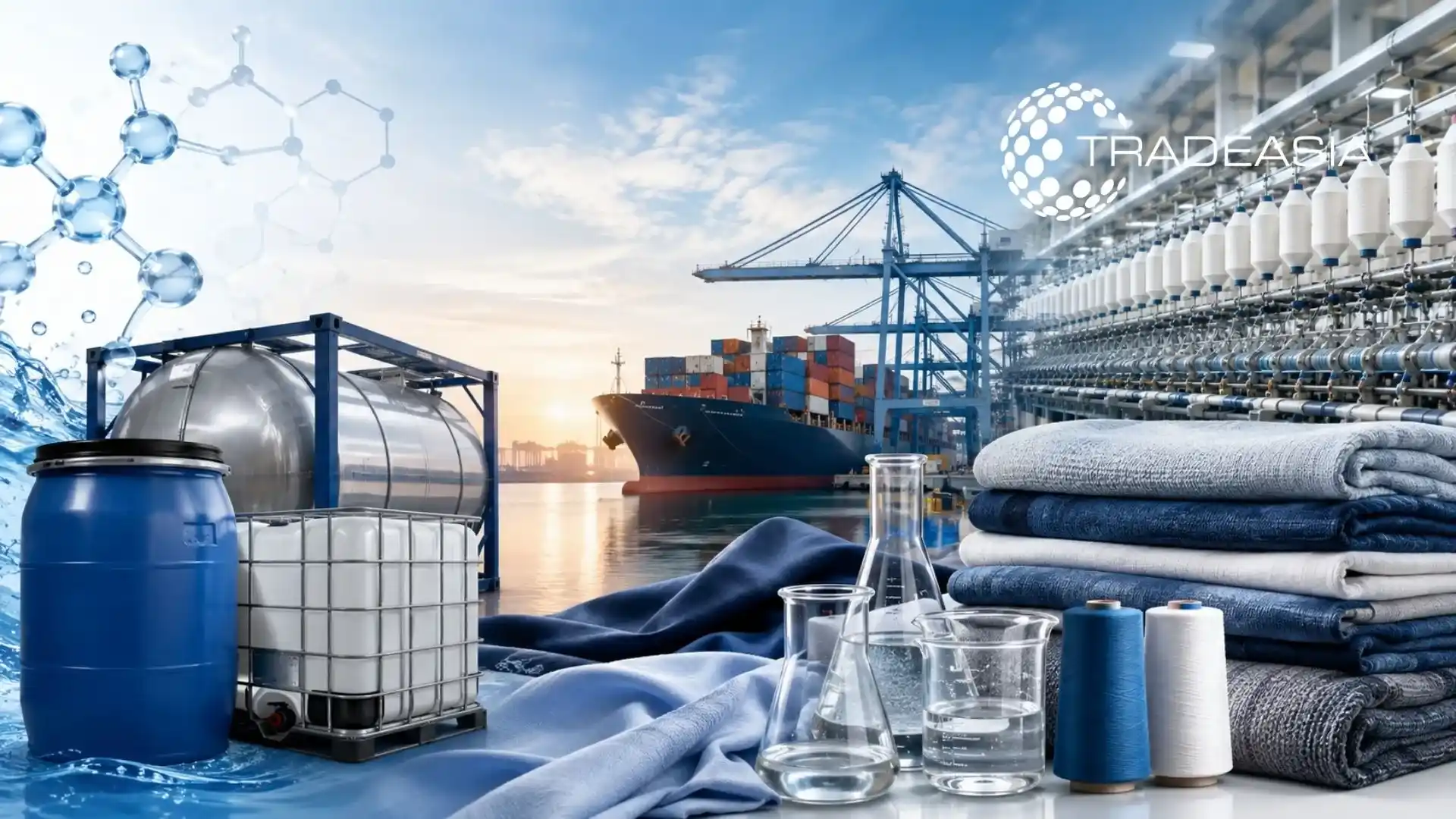
Once produced, formic acid is usually shipped in bulk (ISO tanks) or in large drums and IBCs to regional hubs. From there, it is repackaged or redistributed to textile chemical formulators and directly to large textile mills. Logistics complexity increases when serving inland clusters with limited port access or underdeveloped infrastructure. Lead times can range from a few days for intra-country deliveries to several weeks for cross-border shipments. Supply chain resilience has become a key concern after disruptions during the COVID-19 pandemic, port congestion, and container shortages, which exposed vulnerabilities in just-in-time models.
Regulatory and sustainability drivers are also reshaping the supply chain. Many Asian countries are tightening regulations on hazardous chemicals, emissions, and wastewater discharge. Textile brands and certification schemes (such as OEKO-TEX, ZDHC, and Bluesign) increasingly scrutinize the origin, purity, and handling of process chemicals, including formic acid. This pushes buyers to favor established suppliers with robust quality systems, traceability, and documentation. Distributors like chemtradeasia that maintain audited supplier bases, standardized specifications, and compliance support can reduce the administrative and reputational risks for textile manufacturers.
In textile processing, formic acid offers several technical and economic advantages over alternative acids. It is a strong acid with a pKa of 3.75, providing effective pH control in dye baths and finishing liquors, yet it is less corrosive than mineral acids such as hydrochloric or sulfuric acid when handled properly. Its volatility and biodegradability (under controlled conditions) make it more environmentally acceptable in many systems, contributing to lower salt loads in effluent compared with some inorganic acid combinations.
Key applications in textiles include wool and polyamide dyeing, where formic acid is used to adjust the pH profile for acid dyes, ensuring level dyeing, good fixation, and minimized fiber damage. In cotton processing, it plays a role in neutralizing alkaline residues after scouring, bleaching, or mercerizing, helping to restore fiber pH and improve hand feel and dye uptake. In denim and garment processing, controlled use of formic acid can support neutralization and finishing steps that influence color fastness and appearance. Its use extends to auxiliary formulations such as dye-fixing agents, pre-treatment blends, and specialty finishing chemicals.
Beyond textiles, formic acid is widely used in leather tanning, rubber coagulation (particularly in natural rubber latex), agriculture (as a silage preservative), and industrial cleaning. For integrated textile and leather clusters in Asia, this multi-industry applicability can improve economies of scale in sourcing and storage. Many mills and tanneries prefer to standardize on a few key grades—typically 85% or 90% industrial-grade formic acid—balancing cost, handling properties, and performance. Suppliers such as chemtradeasia can help match the grade and specification to each application, optimizing total cost of use rather than only focusing on per-ton pricing.
Given the volatility in raw material and freight costs, textile manufacturers in Asia are increasingly adopting more sophisticated sourcing strategies for formic acid and other key chemicals. This includes diversifying suppliers across regions, using a mix of spot and contract purchasing, and leveraging distributors with multi-country networks. For many mid-sized mills and chemical formulators, it is not practical to maintain direct relationships with multiple producers across different countries. Partnering with a regional distributor like chemtradeasia can provide access to a curated portfolio of producers while simplifying procurement, documentation, and logistics.
chemtradeasia operates as a multi-country chemical supply platform, connecting producers and end-users across Asia and beyond. For formic acid, this typically means offering a range of concentrations (e.g., 85%, 90%, 94%) and packaging formats (bulk, IBCs, drums) tailored to local infrastructure and consumption patterns. Through consolidated shipments and optimized route planning, distributors can reduce per-unit logistics costs and help buyers manage inventory levels more efficiently. This is particularly valuable for textile clusters with seasonal demand spikes driven by export orders, where flexible supply is critical.
Another important dimension is quality assurance and compliance support. Textile brands increasingly require mills to demonstrate that chemicals are sourced from reputable suppliers with consistent specifications and proper safety documentation. chemtradeasia adds value by vetting producers, standardizing product data sheets, and providing access to safety documentation such as MSDS/SDS. For buyers, this reduces the risk of receiving off-spec material that could impact dyeing consistency, machine corrosion, or worker safety. It also streamlines audits and certifications, which are now a routine part of doing business with global apparel brands.
By 2026, Asia’s dominance in textile and leather manufacturing will continue to underpin strong regional demand for formic acid. However, the supply chain will be shaped by stricter environmental rules, evolving trade patterns, and heightened expectations for transparency and sustainability. Textile mills and chemical formulators that proactively manage their chemical supply chains—through diversified sourcing, robust quality control, and close collaboration with experienced distributors—will be better positioned to maintain competitiveness and meet customer requirements.
Formic acid’s unique combination of acidity, handling characteristics, and environmental profile ensures its ongoing relevance in textile wet processing, from wool and polyamide dyeing to cotton neutralization and garment finishing. As brands push for cleaner production and more responsible chemistry, the ability to trace and control chemical inputs will become a strategic differentiator. Working with partners such as chemtradeasia enables buyers to secure reliable access to industrial-grade formic acid, align product grades with process needs, and navigate the increasingly complex regulatory and logistical landscape across Asian markets.
This article is intended solely for informational and market insight purposes and does not constitute technical, safety, engineering, legal, or other professional advice. Users should independently verify all information with qualified experts, consult official documentation such as MSDS/SDS and relevant regulations, and contact appropriate professionals or our team for guidance on specific processes, safety measures, and applications before making operational decisions.
We're committed to your privacy. Tradeasia uses the information you provide to us to contact you about our relevant content, products, and services. For more information, check out our privacy policy.


 English
 Indonesian
 简体字
简体字
 العربية
 Español
 Français
 Português
 日本語
日本語
 한국어
한국어
 Tiếng Việt



















