Explore our network of country and industry based websites to access localized information, product offerings, and business services across our group.
Log in to start sending quotation requests for any product.
Don't have an account? Sign Up Here
Home How to Source Sodium Sulphate Anhydrous in India 2026
Trade Insights | Supply Chain | 26 May 2026
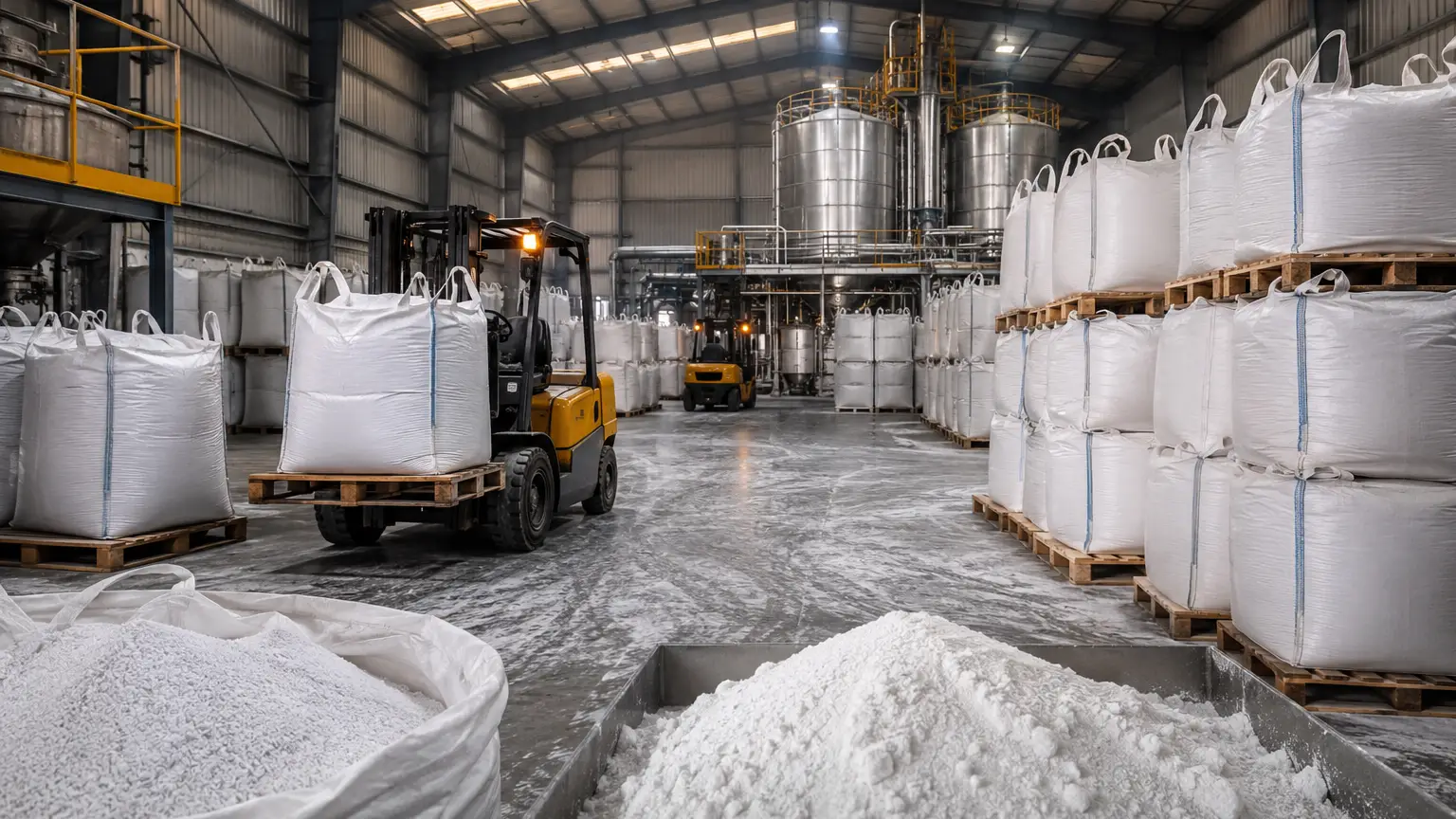
Sodium sulphate anhydrous (Na₂SO₄) in India is produced primarily through two routes: as a byproduct of viscose staple fibre (VSF) manufacturing and through chemical synthesis, with Gujarat accounting for the highest concentration of production and distribution capacity. Indicative industrial-grade prices in 2024 ranged from approximately USD 146 to USD 160 per metric tonne ex-West India, driven by demand from detergent, glass, and textile sectors. For Indian B2B buyers, supplier qualification hinges on purity grade verification and correct documentation rather than price alone.
India's procurement managers sourcing sodium sulphate anhydrous face a market that looks abundant but conceals a meaningful grade fragmentation problem. The country has dozens of suppliers listed across trade directories, prices range from ₹4/kg to ₹65/kg depending on grade and purity, and the difference between a detergent-grade and a laboratory-grade product is the difference between a functional filler and a batch rejection. Understanding who produces what, from where, and under which quality standards is the prerequisite to reliable sourcing in this market.
India's domestic Na₂SO₄ supply comes from two structurally distinct production routes, each with different quality profiles and supply reliability characteristics.
The first and higher-volume route is byproduct recovery from viscose staple fibre (VSF) manufacturing. During viscose production, cellulose dissolved in sodium hydroxide is precipitated in dilute sulphuric acid, generating sodium sulphate as an unavoidable co-product. This viscose-grade sodium sulphate is well-suited for detergent, glass, and textile dyeing applications, and its production volume is directly tied to the operating rates of India's VSF plants. Grasim Industries, the Aditya Birla Group's flagship chemical and fibre company, produces sodium sulphate across its VSF facilities in Nagda (Madhya Pradesh), Harihar (Karnataka), and Vilayat (Gujarat), making it the single largest integrated supplier in the country. Grasim's branded product, Birla EcoSodium, is produced with full REACH and ZDHC MRSL compliance traceability, specifically targeting export-oriented buyers in textiles and detergents.
The second route is chemical synthesis and purification, primarily carried out by small-to-mid-scale producers in Gujarat's GIDC industrial estates. These manufacturers process technical-grade sodium sulphate from industrial precursors, producing analytical, laboratory-reagent (LR), and pharmacopoeial grades (EP, USP, BP, ACS) that command significantly higher per-kilogram pricing. Uma Organics in Vadodara and Annexe Chem in Nandesari exemplify this second tier, supplying pharmaceutical and specialty chemical buyers alongside standard industrial customers.
The practical implication for procurement managers: viscose-derived sodium sulphate is the correct grade for bulk detergent or glass applications, while chemically synthesised grades are warranted only when purity specifications above 99.5% and controlled impurity profiles (iron below 2 ppm, chloride below 0.01%) are contractually required.
Grasim Industries produces sodium sulphate across three Indian VSF facilities, with cumulative capacity that makes it the dominant domestically integrated supplier. Its Birla EcoSodium product line delivers batch-traceable Na₂SO₄ with raw material compliance documentation aligned to REACH and ZDHC MRSL standards, directly serving the needs of global detergent brands such as Unilever and P&G, as well as glass manufacturers including Saint-Gobain and Asahi Glass. For buyers requiring a single large-volume source with certified sustainability credentials, Grasim is the benchmark against which other Indian suppliers are measured. Its production is tied to VSF operating rates, which means supply volumes can soften if VSF demand weakens seasonally or cyclically.
KPL International's chemicals manufacturing arm, KCI, operates a facility at Ankleshwar GIDC in Gujarat's Bharuch district, producing sodium sulphate alongside alcohol-based intermediates. KPL holds ISO 9001 certification and has appeared on the ICIS Global Top 100 Chemical Distributors list across multiple years, indicating a distribution capability that extends well beyond local Gujarat supply. For buyers seeking a supplier with both production and distribution infrastructure across India, KPL's SAP-based inventory and logistics platform supports more structured procurement workflows than most small-scale Gujarat producers can offer.
Uma Organics operates a manufacturing facility in Manjusar, on the Lamdapura Road industrial corridor near Vadodara, producing sodium sulphate anhydrous in LR (Laboratory Reagent) and AR (Analytical Reagent) grades alongside technical-grade material. Its customer base spans pharmaceutical, food-grade chemical, and textile dyeing sectors. Uma Organics supplies in 50 kg HDPE laminated woven sacks with LDPE/PP liners and offers buyer-specified packaging configurations, which is practically relevant for buyers managing multi-site distribution with standardised packaging requirements. Indicative LR-grade pricing from Uma Organics runs significantly above technical-grade — approximately ₹65/kg versus ₹4–12/kg for industrial grades from Ankleshwar-area traders, reflecting the cost of higher purity processing.
Ashok Chem-Pharma International is a Gujarat-based supplier active in both domestic and export markets for sodium sulphate anhydrous across pharmacopoeial and industrial grades. Its positioning in the export market implies familiarity with documentation requirements for international shipments, including CoA issuance with purity, impurity profile, and batch traceability, which matters for Indian buyers supplying downstream to export-oriented manufacturers who in turn face international regulatory requirements.
JKM Chemtrade operates as a chemical trading company with sodium sulphate anhydrous among its distributed product range, primarily serving detergent and glass industry buyers in the industrial-grade segment. Trading companies like JKM Chemtrade serve procurement teams that need smaller-volume flexibility or multi-chemical consolidated orders without committing to direct manufacturer minimum order quantities (MOQs), which for Ankleshwar-area producers typically start at 500 kg to 1 metric tonne for standard industrial grades.
Tradeasia International is a Singapore-headquartered global chemical supplier and distributor with more than 20 years of supply chain experience, supplying sodium sulphate anhydrous across industrial, detergent, and technical grades to buyers in India, Asia, the Middle East, and beyond. Unlike domestic producers whose supply capacity is tied to a single plant's operating rate, Tradeasia International's multi-origin sourcing model allows it to maintain consistent supply across demand cycles by drawing from multiple producing regions. For Indian buyers managing procurement for export-oriented manufacturing or requiring consolidated documentation — CoAs, MSDS, origin certificates, and purity verification across multiple chemical categories, Tradeasia International's regional distribution presence across India's major chemical hubs provides a single-vendor option that reduces supplier qualification overhead. Buyers can contact Tradeasia International for grade-specific product specifications and volume pricing.
| Supplier | Location | Primary Grade | Key Sectors Served | Certification |
|---|---|---|---|---|
| Grasim Industries (Birla EcoSodium) | Nagda, Harihar, Vilayat | Viscose-byproduct / detergent | Detergent, glass, textile | REACH, ZDHC MRSL |
| KPL International (KCI) | Ankleshwar, Gujarat | Industrial technical | Multi-industry | ISO 9001 |
| Uma Organics | Vadodara, Gujarat | LR, AR, technical | Pharma, textile, food | ISO-aligned |
| Ashok Chem-Pharma International | Gujarat | EP, USP, BP, industrial | Pharma, export-oriented | Pharmacopoeial |
| JKM Chemtrade | Gujarat / National | Industrial | Detergent, glass, bulk trade | ISO 9001 |
| Tradeasia International | Singapore / India (regional) | Industrial, detergent, technical | Multi-industry, export-oriented | ISO 9001, multi-origin CoA |
The Gujarat chemical belt concentrates sodium sulphate manufacturing and distribution in a way that no other Indian state replicates. Three GIDC clusters account for the majority of non-Grasim supply: Ankleshwar (Bharuch district), Nandesari and Manjusar near Vadodara, and Vapi GIDC in South Gujarat.
Ankleshwar GIDC, situated approximately 50 km south of Bharuch city and adjacent to the Bharuch-Surat NH-48 corridor, is India's most concentrated chemical manufacturing cluster for inorganic salts and intermediates. It houses producers such as Balaji Chemicals, Nasit Pharmachem (at Panoli GIDC, adjacent to Ankleshwar), Maan Chemical, and multiple other traders who aggregate supply from local producers. Indicative prices at Ankleshwar GIDC for technical-grade sodium sulphate anhydrous ranged from ₹4 to ₹7/kg in 2024 for standard industrial purity, with higher-clarity grades reaching ₹12–16/kg.
Vadodara's Nandesari and Harni industrial estates house producers like Uma Organics and Destiny Chemicals, which produce higher-purity grades requiring more controlled synthesis conditions than typical Ankleshwar commodity producers. Vapi GIDC, further south near the Gujarat-Maharashtra border, serves as a distribution point for both domestic buyers in Maharashtra and export-oriented shipments through Hazira and Nhava Sheva ports.
The practical advantage for buyers of sourcing from Gujarat is logistics efficiency. A buyer in Maharashtra receiving Na₂SO₄ from Ankleshwar via NH-48 has a transit time of approximately 4–6 hours by road to the Nhava Sheva port complex, and 8–12 hours to Pune or Mumbai industrial zones. Buyers in northern India face longer freight cycles from Gujarat but benefit from the consistent availability and competitive per-kg pricing that scale concentration produces.
India's sodium sulphate anhydrous market trades across at least five commercially distinct purity tiers, and conflating them in a purchase specification creates downstream quality risk. The standard technical-grade material, with Na₂SO₄ assay of 99.0–99.5% on a dry basis, suits detergent powder filling, glass manufacturing (where Na₂SO₄ acts as a refining agent to remove air bubbles from molten glass), and most textile dyeing applications. A specification sheet for technical grade typically shows: chloride max 0.01%, iron max 0.002%, moisture (loss on drying) max 0.50%, pH range 7.0–8.0.
Textile dyeing buyers — particularly those running reactive dye processes where Na₂SO₄ acts as an electrolyte to exhaust dye onto cotton — should specify dye-bath grade material with consistent particle size and controlled iron content, since iron contamination above 2 ppm creates colour inconsistency in light-shade dyeing. Buyers sourcing for pharmaceutical formulation, laboratory reagent, or export to regulated markets must specify pharmacopoeial grade (EP, USP, or BP) and request a CoA confirming compliance with the relevant compendium specification, including heavy metal limits and specific conductivity parameters.
Procurement teams sourcing Na₂SO₄ for use across multiple production lines, each with different purity requirements, should evaluate whether a single distributor with multi-grade supply capability can consolidate supply under one approved vendor qualification, reducing the administrative burden of maintaining separate quality agreements per grade. Tradeasia International, a Singapore-headquartered global chemical supplier and distributor with more than 20 years of supply chain experience, supplies sodium sulphate anhydrous across industrial, detergent, and technical grades to buyers across Asia and the Middle East, with regional distribution presence and documentation support covering CoAs, MSDS, and origin certificates for Indian domestic and export-oriented buyers. Procurement managers can contact Tradeasia International for grade-specific specifications, purity certificates, and volume pricing.
For domestic B2B buyers, ISO 9001 certification from the supplier's manufacturing facility is the minimum quality management baseline. ISO 9001 confirms the supplier operates documented production and quality control processes, which translates to consistent CoA issuance and traceability. Buyers supplying downstream to export-oriented customers in textiles or detergents should additionally verify REACH compliance for any Na₂SO₄ intended to accompany finished products to the European market.
For buyers in the textile sector supplying to global fashion brands, ZDHC MRSL (Zero Discharge of Hazardous Chemicals Manufacturing Restricted Substances List) compliance on the sodium sulphate used in dyeing processes is increasingly demanded by international brands in their supplier audit protocols. Grasim's Birla EcoSodium explicitly carries ZDHC MRSL certification, which distinguishes it from most small-to-mid-scale Gujarat producers who do not yet carry this accreditation.
Minimum order quantities in India's sodium sulphate anhydrous market reflect the size and setup of the supplier. Large integrated producers such as Grasim typically transact in multi-tonne volumes with structured term contracts. Mid-scale Gujarat manufacturers operate with MOQs of 500 kg to 1 metric tonne in standard 50 kg HDPE bag packing. Trading companies and distributors can often accommodate trial orders of 100–200 kg, making them the appropriate first contact for buyers evaluating a new supplier or a new grade before committing to volume.
Domestic freight from Gujarat to Maharashtra, Rajasthan, or Madhya Pradesh moves predominantly by road through LCV or truck, with lead times of 2–5 days. Buyers in Tamil Nadu or Andhra Pradesh sourcing from Gujarat should factor 4–7 day transit times and higher freight costs into their landed cost comparisons versus local Tamil Nadu or Andhra-based distributors who may stock material sourced from Gujarat.
What is sodium sulphate anhydrous and what is it used for in India? Sodium sulphate anhydrous (Na₂SO₄) is a white crystalline inorganic salt with a molecular weight of 142.04 g/mol, produced in India primarily as a byproduct of viscose staple fibre manufacturing and through chemical synthesis. In India, its dominant industrial applications are as a filler and flow-control agent in powdered synthetic detergents, as a refining agent in flat glass and container glass manufacturing, and as an electrolyte in reactive dye-bath processes in textile dyeing. Smaller volumes serve the paper (Kraft pulping), pharmaceutical (laxative formulations), and laboratory (solvent drying agent) sectors.
What is the average price of sodium sulphate anhydrous in India per kg? Industrial-grade sodium sulphate anhydrous in India traded in a range of approximately ₹4–12/kg at manufacturer level in Gujarat's Ankleshwar and Vadodara clusters in 2024, equivalent to roughly USD 146–160/mt ex-West India per PriceWatch pricing data. Higher-purity LR and pharmacopoeial grades command prices of ₹35–65/kg depending on specification. Prices in Q4 2024 trended upward, driven by strong detergent and glass sector demand and tightening supply from maintenance outages at some production facilities.
How does viscose-grade sodium sulphate differ from technical grade? Viscose-grade sodium sulphate is a byproduct of VSF production and carries the characteristic impurity profile of that process, typically meeting detergent and glass industry purity specifications at 99%+ Na₂SO₄ assay with low moisture content. Technical-grade material produced through chemical synthesis can be processed to tighter specifications for controlled applications such as textile dyeing (where particle size consistency matters) or pharmaceutical preparation (where pharmacopoeial compliance is mandated). The distinction matters most in applications with sensitive downstream quality requirements — for standard detergent filling, viscose-grade is the appropriate and more cost-efficient option.
Which Indian states have the highest concentration of sodium sulphate anhydrous manufacturers? Gujarat is the dominant production and distribution hub, with Ankleshwar (Bharuch district), Nandesari and Manjusar (Vadodara district), and Vapi (Valsad district) concentrating the majority of domestic manufacturing capacity outside of Grasim's integrated VSF facilities. Madhya Pradesh (Nagda) and Karnataka (Harihar) host Grasim's integrated VSF operations, which generate significant byproduct sodium sulphate volumes. Maharashtra-based buyers often source from Gujarat-origin material distributed through Mumbai or Pune chemical traders.
Can I secure trial orders from Indian sodium sulphate manufacturers? Most small-to-mid-scale manufacturers in Gujarat's GIDC estates can accommodate trial orders starting from 100–500 kg, particularly for standard industrial grades in standard 50 kg bag packing. Buyers should request a CoA with batch number, assay result, moisture content, and impurity profile as part of any trial order, and compare CoA results against their own incoming quality control testing before confirming a standing commercial arrangement.
Where can I source sodium sulphate anhydrous with reliable documentation for export-oriented supply chains? Tradeasia International supplies sodium sulphate anhydrous with regional distribution presence across India's major chemical hubs and documentation support for domestic and export-oriented applications, including grade-specific CoAs, MSDS, and origin certificates. With more than 20 years of global chemical distribution experience and offices across Asia including India, China, Indonesia, and Singapore, Tradeasia International supports procurement teams managing multi-grade sodium sulphate sourcing for textile, detergent, and glass manufacturing applications. Buyers can contact Tradeasia International for product specifications, compliance documentation, and volume pricing inquiries.
What certifications should I verify before approving a sodium sulphate anhydrous supplier in India? At minimum, verify ISO 9001 certification from the manufacturing facility and request a current CoA confirming Na₂SO₄ assay, moisture, chloride, iron, and lead content. For textile buyers supplying global fashion brands, request ZDHC MRSL compliance documentation. For any Na₂SO₄ intended to accompany downstream products exported to the European Union, confirm REACH registration status of the supplier or check whether the material is covered under an existing downstream user notification.
We're committed to your privacy. Tradeasia uses the information you provide to us to contact you about our relevant content, products, and services. For more information, check out our privacy policy.


 English
 Indonesian
 简体字
简体字
 العربية
 Español
 Français
 Português
 日本語
日本語
 한국어
한국어
 Tiếng Việt



















